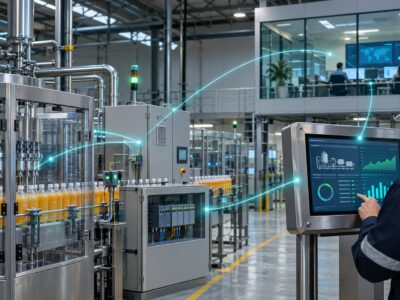
An industrial plant may have PLCs, sensors, SCADA systems and advanced management platforms and still not know precisely where it is losing productivity.
The problem isn't always a lack of data. In many facilities, the information exists, but it remains scattered among machines, control systems, and corporate applications that don't exchange information in a structured way.
This disconnection makes it difficult to identify micro-stoppages, analyze process deviations, calculate reliable indicators, and make timely decisions.
IT/OT integration makes it possible to address this problem by connecting industrial operating environments with enterprise information systems, through an architecture that guarantees interoperability, data contextualization and cybersecurity, and a governance model that clearly defines who is responsible for each part.
Why does the lack of IT/OT integration affect industrial productivity?
In a food and beverage plant, for example, PLCs control the machines, SCADA monitors process variables, the MES system manages production execution, and the ERP manages orders, materials, and resources.
However, these systems do not always share information automatically.
A machine can register hundreds of micro-stoppages while the ERP system only receives the production quantity at the end of the shift. The operations manager knows the result, but not necessarily the causes of the losses.
This lack of visibility generates three consequences:
• Productivity losses: deviations and unproductive times that are not identified in a timely manner.
• Higher operating costs: manual efforts to consolidate data and difficulties in detecting waste.
• Delayed decisions: incomplete information that delays corrective actions.
The challenge is to transform industrial data into useful information for managing production.
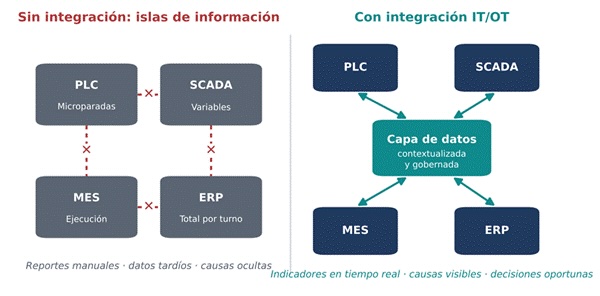
Figure 1. From isolated systems to a shared data layer between plant and business.
Why can't IT and OT connect directly without a proper architecture?
IT and OT environments respond to different needs. Their integration is technically possible, but requires considering four fundamental challenges.
1. Different operational priorities
IT prioritizes the confidentiality, integrity, and availability of business information, as well as standardization and integration with business systems.
OT must especially protect the physical safety of people and processes, equipment availability, control integrity, and real-time requirements. Therefore, automation teams are typically cautious when opening up their networks.
A computer outage can affect administrative applications. In OT, improper intervention can also stop a line or disrupt a physical process.
2. Heterogeneous protocols and architectures
Industrial equipment uses protocols such as Modbus, PROFINET, EtherNet/IP and OPC UA.
Some operate over TCP/IP, but this does not mean that their information models, communication mechanisms, or security requirements are directly compatible with corporate systems.
Integration may require gateways, OPC UA servers, MQTT brokers, connectors, brokerage platforms, and data translation or normalization mechanisms.
3. Different technological life cycles
Corporate systems are typically updated more frequently than industrial equipment.
A PLC or SCADA system can remain operational for decades, while certain software and communications components cease to receive support.
This creates compatibility difficulties and cybersecurity risks that must be managed without compromising production continuity.
4. Poorly defined organizational responsibilities
Often, the biggest obstacle is not technological, but organizational. Automation, Information Technology, and Networks tend to work in isolation, with different budgets, priorities, and decision-making criteria.
When no one is clearly responsible for the information flowing between the plant and the business, projects remain isolated pilots or generate point-to-point integrations that are difficult to maintain.
Edge architecture: capturing data without affecting control
One of the main risks when connecting the plant is overloading critical controllers with requests for information from multiple systems.
An increasingly widespread practice is to decouple data capture using an Edge node, using platforms such as Ignition or AVEVA:
• Downstream, the Edge gateway communicates with PLCs and equipment from different brands using OPC UA or native protocols, concentrating the readings at a single point.
• At the Edge itself, data is normalized, filtered, and associated with its operational context.
• Upstream, contextualized information is published via MQTT, a lightweight publisher/subscriber protocol, to historians, MES, analytics platforms, or the cloud.
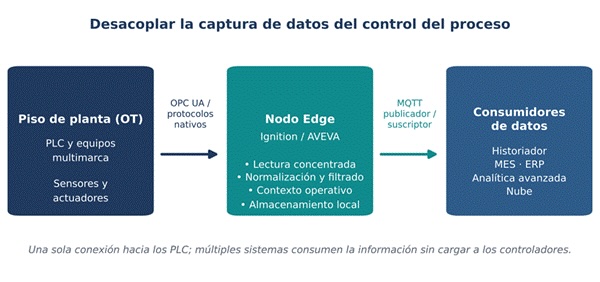
Figure 2. Edge Architecture: OPC UA towards plant equipment and MQTT towards the systems that consume the information.
This approach reduces the burden on controllers, simplifies the incorporation of new data consumers, and allows the integration of modern machines and equipment with many years of operation without replacing entire lines.
The three structural problems that prevent the use of industrial data
Before implementing an IT/OT convergence solution, it is advisable to diagnose three areas.
1. Capture and connectivity: data is not available
The equipment may operate in isolation, use different protocols, or record information insufficiently.
For example, capturing data every five minutes can hide micro-stops of a few seconds.
Without adequate connectivity and acquisition, indicators such as availability, actual speed, and OEE can inaccurately represent production performance.
To improve the acquisition and monitoring of industrial information, SCADA systems allow the centralization of data from equipment and production processes, facilitating the identification of alarms, interruptions, and operational deviations that affect plant performance.
2. Contextualization and governance: the data are not sufficiently reliable
A temperature, pressure, or speed reading has limited value if it cannot be associated with a machine, product, batch, shift, or manufacturing order.
In addition, systems can use different units, time references, or calculation criteria.
Contextualization transforms industrial signals into interpretable information. The government establishes rules to maintain their quality, traceability, availability, and security.
3. Integration and utilization: data does not generate decisions
Even when connectivity exists, information can remain isolated from the MES, ERP, or analytics platforms.
It can also happen that the boards identify deviations, but there are no responsible parties or procedures to act on them.
The real transformation begins when data allows you to identify a loss, analyze its causes, take action, and verify its outcome.
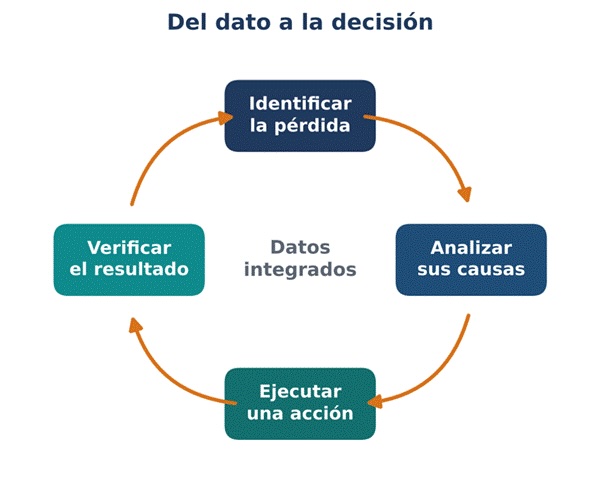
Figure 3. Decision cycle based on integrated data.
Once IT and OT systems are integrated, it is essential to apply good manufacturing data visualization practices to transform industrial information into understandable indicators that allow for the detection of efficiency losses and the prioritization of corrective actions.
Who is responsible for plant data? The IT/OT governance model
An industrial data platform should not belong exclusively to IT, like just another database, nor should it be isolated in Automation, like a local historian that no one else consults.
Treating plant data as a shared resource allows future initiatives, such as predictive maintenance, energy efficiency, or process simulation, to draw from a single, contextualized, and reliable source.
To achieve this, it is advisable to define a clear responsibility matrix from the beginning of the project:
• Automation: maintains responsibility for control systems (PLC, SCADA) and machinery on the plant floor.
• Information Technology: maintains responsibility for the ERP and corporate applications.
• Networks and infrastructure: manages connectivity and coordinates communications to the plant with Automation.
• Digitization: builds and governs the intermediate layer of shared data and connects all areas. It can be a dedicated area or a multidisciplinary team with assigned roles.
• Cybersecurity: assesses risks and verifies that both the plant and corporate systems are protected in accordance with ISA/IEC 62443.
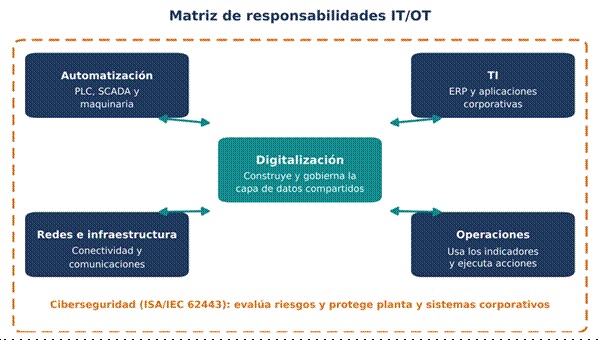
Figure 4. Distribution of responsibilities among the areas involved in IT/OT integration.
This distribution reduces conflicts between areas, prevents integration from depending on individual initiatives, and makes it easier to scale projects beyond a single line or machine.
Industrial architecture and cybersecurity: Purdue model, ISA-95 and IEC 62443
IT/OT integration must be designed considering the risks introduced by the exchange of information between corporate networks and control systems.
A connection without segmentation or adequate controls can expand the attack surface and compromise critical assets.
Three fundamental references are the Purdue model, the ISA-95 standard (IEC 62264) and the ISA/IEC 62443 series of standards.
What is the Purdue model and how does it relate to ISA-95?
The Purdue model, associated with the PERA architecture, allows for the hierarchical representation of industrial systems:
• Level 0: physical process, sensors and actuators.
• Level 1: basic control using PLC and other controllers.
• Level 2: supervision and operation using HMI and SCADA.
• Level 3: Industrial operations management, including MES applications.
• Level 4: Enterprise systems such as ERP.
The ISA-95 standard uses this hierarchy as a basis for defining the boundary between systems that plan the business (level 4) and those that manage and execute production (level 3 and below), as well as the information models for exchanging production orders, materials, and results between these two worlds. Respecting this boundary prevents chaotic integrations and allows the plant to maintain operations even if the corporate network fails.
Traditional architectures also use an industrial demilitarized zone (IDMZ) between corporate and operational networks.
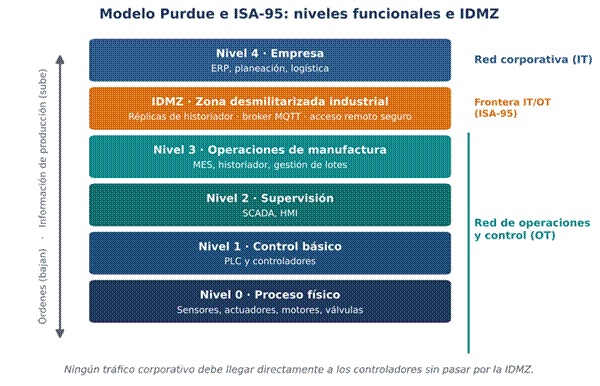
Figure 5. Purdue model levels, IT/OT boundary defined by ISA-95 and industrial demilitarized zone (IDMZ).
Purdue is a reference for organizing architecture, not a guarantee of safety in itself.
What does IEC 62443 state?
The ISA/IEC 62443 series provides a cybersecurity framework for industrial automation and control systems.
Key principles include risk assessment, zoning and duct segmentation, access control, security requirement definition, and lifecycle management. The NIST SP 800-82 guide complements these criteria with specific recommendations for OT environments.
While Purdue and ISA-95 help to represent the functional distribution of systems, IEC 62443 allows you to define how to protect their components and communications.
These approaches are complementary, although modern IIoT architectures, for example those based on Edge and MQTT, may require designs that do not strictly follow all traditional levels.
Best practices include network segmentation, least privilege, secure remote access, asset inventory, monitoring, and controlled change management.
Four-phase roadmap for implementing IT/OT integration
IT/OT integration isn't solved with a single software purchase. It requires a phased approach that addresses connectivity, data meaning, data protection, and operational utilization. Data governance and cybersecurity are cross-cutting: they are built in from the design stage and maintained throughout the project.
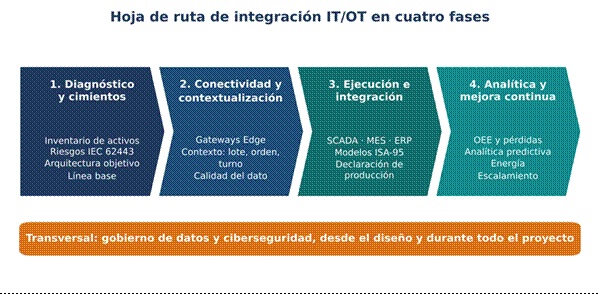
Figure 6. Four-phase roadmap, with data governance and cybersecurity as cross-cutting themes.
Phase 1. Diagnosis and foundations
Establish an IT/OT governance committee with representatives from Automation, IT, Networks and Operations, and define the responsibility matrix.
Inventory PLCs, sensors, SCADA, historians, and other sources of information, evaluating protocols, communication capabilities, obsolescence, and operational constraints.
Evaluate risks in accordance with ISA/IEC 62443 and design the target architecture, including segmentation, zones and conduits and IDMZ where applicable.
Define the baseline of the indicators that will be used to measure results.
Phase 2. Connectivity and data contextualization
Deploy Edge gateways on priority equipment and lines to acquire data without interfering with process control.
Relate the captured variables to equipment, lines, orders, products, batches, and shifts. A temperature alarm ceases to be an isolated record and can be linked to a quality deviation in a specific order.
Centralize information in an industrial data historian or platform, applying standards of nomenclature, units and time references, and validating its quality before using it to make decisions.
Phase 3. Implementation and integration with corporate systems
Establish information exchanges between SCADA, historians, MES, ERP and analytical platforms, following the ISA-95 models.
Automate, according to the needs of the plant, the downloading of production orders, the production declaration, batch control and the visualization of indicators on the floor.
When bidirectional data flow is required, specific authorizations and controls must be defined. Information transfer to OT should not imply direct and unrestricted access to controllers.
Phase 4. Advanced analytics and continuous improvement
Convert integrated information into indicators, alerts, analysis, and operational actions.
Key applications include OEE monitoring, loss identification, traceability, predictive analytics, and process and energy consumption optimization.
For example, through advanced analytics solutions such as AVEVA Advanced Analytics for the food industry, plants can analyze the relationships between process variables, detect patterns associated with quality deviations, and anticipate situations that generate waste and rework.
Periodically compare the results against the baseline and extend the solution to new lines or plants.
The ultimate goal is not to visualize more data, but to improve decisions that affect production.
What indicators allow us to evaluate the results?
The effectiveness of an IT/OT integration project should be measured using technical and business indicators.
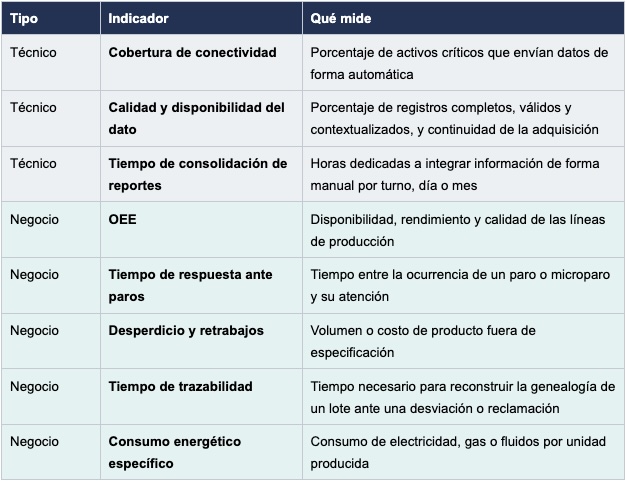
Improvements in these indicators should be compared to a baseline and linked to verifiable economic results.
MES Automation: From industrial connectivity to decisions that improve production
At MES Automation, we help industrial companies connect plant systems with enterprise information platforms, transforming operational data into useful information for managing production.
Our experience in automation, SCADA, MES systems, technology integration and industrial analytics allows us to handle projects from diagnosis and data acquisition to their use in decision-making processes, working in a coordinated manner with the Automation, IT and Operations teams of each client.
The goal is to develop scalable, interoperable architectures designed with cybersecurity criteria, aligned with the real needs of each installation.
Does your plant generate data, but you're still not able to take advantage of it?
If your teams produce siloed data, your reports require manual consolidation, or your managers are unable to promptly identify the causes of productivity losses, it's time to evaluate your IT/OT architecture. Contact MES Automation to conduct a connectivity assessment of your plant, identify key integration gaps, and define a roadmap that transforms industrial data into better operational decisions without compromising business continuity.

Originally published on October 14, 2026, updated on November 16, 2026
 AVEVA Advanced Analytics for the food industry: how to reduce waste and anticipate quality problems