
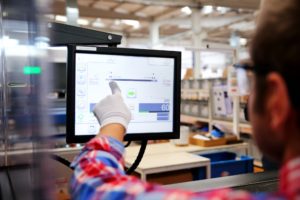
Standardizing processes, improving productivity, ensuring compliance, keeping employees trained, and optimizing the operational process are some examples of what can be achieved with a visual factory.
Improving productivity is what makes us increasingly competitive. Thanks to digital transformation , it's possible to optimize industry, leading to ever-increasing productivity. In this context, small changes with highly profitable investments can contribute to process optimization.
It is for this reason that today we will talk about visual factories, a totally affordable resource that will help your business become increasingly more productive. Shall we start?
What is a visual factory?
A visual factory, also known as visual management, is one in which essential information such as calls for help, production objectives and progress are useful for day-to-day life, are arranged in easily accessible places and can be consulted quickly during the work routine.
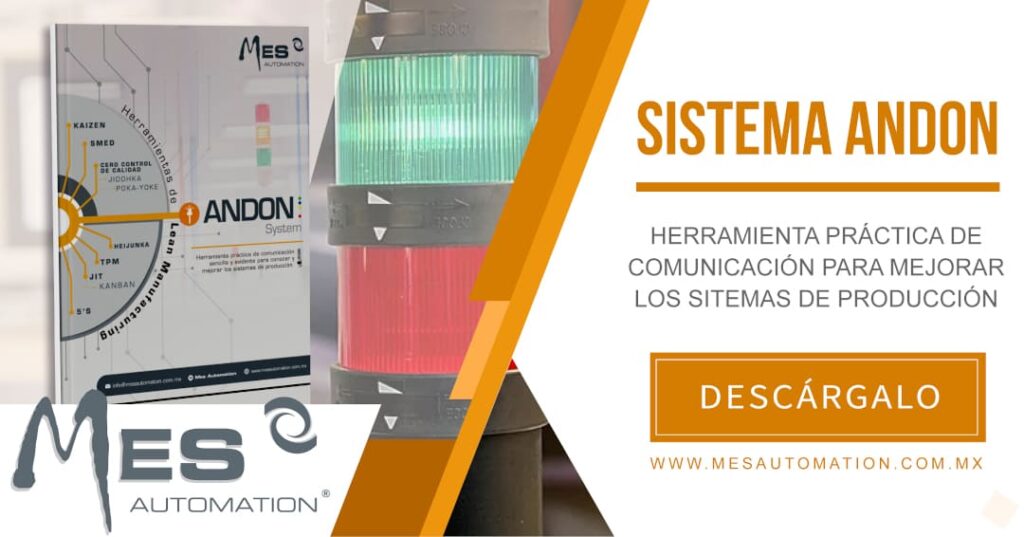
Visual management uses various resources to place important information in view of all workers. Displays, Turrets, Light signs and real-time messages, among other resources, can be used to transmit the desired information.
By making critical information available to workers, it is possible to create a safer and more efficient work environment, since employees themselves can clarify their doubts without the need to consult a superior.
What are the Benefits of having a visual factory?
The advantages that the concept of a \"visual factory\" brings is supporting the best functioning of production. Below, you will see some of the benefits it provides.
Increase efficiency
Visual management allows the standardization of processes and gives workers the necessary knowledge to perform their tasks efficiently and effectively, eliminating unnecessary actions and allowing the processes to be executed correctly.
Improves productivity
The implementation of the visual factory is quickly reflected in significant improvements. From the moment employees know what to do and when, quality, cost, delivery time are improved and, consequently, productivity increases.
Reduces risks
Visual resources guide workers to make better decisions. This avoids risks, not only of technical errors, but also of personal safety. Warning, caution and danger signs, for example, avoid serious risks in all factory processes, helping to minimize the number of accidents.
Fight the lack of knowledge
When critical factory information is available to everyone, operators, regardless of their length of experience, are easily instructed in the processes to follow and important information in the sector.
It is a form of permanent training, essential for doing a good job.
What is the relationship between visual management and lean manufacturing?
Lean manufacturing is the set of resources that allow processes that do not add value to the product to be discarded, in this way waste is avoided, not only of raw and semi-finished materials but also of labor and processes.
A visual factory collaborates directly with lean manufacturing, since it helps to graphically reveal the points that require attention for improvement, as well as to show the progress of implementations to standardize processes, reduce waste and thus effectively measure how processes benefit from increased productivity.
How to improve your factory communication with visual resources?
Next, we will show you how to implement visual management in your factory.
Identify information gaps
The first step to implementing a visual factory is to identify information deficits. If someone on your team asks you a question more than once, it is because they lack that information. Or if you notice that a process is not being executed correctly or needs to be standardized, you can also consider it as an information deficit.
This type of information is the first thing you should incorporate into your visual management plan. Knowing what information you need to make available, it is time to think about the best way to do it.
As we mentioned, they can be electronic communication panels, digital displays, multi-color turrets, sounds, among others. It all depends on the type of information you want to convey.
Use more Digital Signage
Digital Signage can be very useful to indicate the progress of production, calls for help, machine failure, replenishment of materials to production lines, quality problems, safety, among others. Using them you can optimize processes and contribute to improving the efficiency and productivity of workers.
Digitally transform procedures and work instructions
Aids to the operator such as Procedures or Work Instructions are very important, since they guide you in case of any doubt. Keeping these documents digitally, in real time, is a great help to avoid rework and considerably reduce waste. Using friendly software platforms will allow these concepts to be implemented quickly without the need for large investments. You can also create easy-to-read texts, with short paragraphs and clear and objective information that reminds the operator, in real time. So, make a list to list the procedures or any other resource that helps improve the operator's productivity and rely on digital platforms.
Select software platforms that allow you to communicate changes to workers, in real time.
Clearly, factory employees will notice the modifications that are made and quickly with a simple glance they will be informed of the progress of production, their objectives to be achieved, and the main calls for help. The reason is essential to visually report the results of their contributions at work, subtly inviting them to be informed. To do this you must have software platforms that easily help you do this work.
The organization within a factory is essential for its proper functioning and visual management contributes significantly to this and to lean manufacturing.
Using simple and cost-effective resources, such as visuals, can optimize factory productivity and give you an excellent ROI.
If you haven't done so yet, don't hesitate and start implementing your visual factory right now. You will not regret it!
We want to bring you the best industry content that will be truly useful for your business. That's why we invite you to subscribe to our newsletter , and you'll soon start receiving content that's really interesting to you.
Originally published on December 8, 2020, updated on November 30, 2023
💬Join the discussion
We value your opinion! If you enjoyed our article, we invite you to leave your comments and share your perspective on LinkedIn . We'd love to hear your ideas and enrich the discussion in our community.
 Discover how to improve the productivity of your factory

