Lean manufacturing or lean manufacturing is a management philosophy that focuses on optimizing production systems through the reduction and elimination of activities that do not add value to the process, increasing the value of each activity carried out and eliminating what is not requires.
The Lean Manufacturing system has been defined as a philosophy of manufacturing excellence, based on the planned elimination of all types of waste.
It also frames techniques such as 5'S, Kanban, Poke Yoke and Just in time, and the different technological solutions that allow them to be applied effectively.
Good! Now that you know what lean manufacturing is about, it's time for us to delve into some topics, so we will explain 4 things that you probably still don't know about lean manufacturing.
1. What waste do you focus on?
To know what lean manufacturing is about, we must focus on the 7 wastes it concentrates on, so in the following lines we will detail them.
I. Overproduction
This term refers to processing items in greater quantities than the customer demands or producing something before it is needed.
Among the main causes are: Misusing automation, letting the machines work at their maximum capacity, poor planning or an unbalanced distribution of production over time.
II. Wait time
It basically refers to lost time, in which operators and clients wait for information or machine breakdowns occur, as well as a lack of materials or supplies.
Without a doubt, this element is a bottleneck, as it affects and slows down the production process of a factory.
What causes this waste? Among other things, the imbalance between one part of the process and another, unplanned maintenance, long process start-up times and material quality problems.
III. Transport
Another focus of lean manufacturing is to reduce and eliminate unnecessary movement of products and materials, since this does not add any value to the product.
Additionally, ineffective transportation results in large expenditures on equipment, fuel, and labor.
To put an end to this problem, lean manufacturing directly attacks its causes, including poor plant layout and long supply times.
IV. Overprocessing or Inappropriate Processes
Logics such as “just” in case and the lack of clarity in the client's requirements are some of the aspects that generate extra work on a product and other unnecessary steps.
V. Unnecessary inventories
Some factories use excess inventory to mitigate the effects of inefficiencies in their production processes.
However, instead of helping, this translates into economic problems for companies and poor use of valuable space.
So that this problem does not arise, lean manufacturing focuses on adjusting production to customer requirements, improving product planning, optimizing communication and using batch production systems (Batch) are some of the approaches to mitigate these imbalances.
SAW. Defects
Logically, defects do not add any value to production processes and, instead, represent significant and high-impact waste. One of the main defects, which should preferably be avoided before having the obligation to reduce and eliminate it, is the repetition or re-processing of work on the products.
Among the causes we can find of the defects are: Lack of control in the process, Low Quality or insufficient training of the personnel.
VII. Unnecessary movements
In production operations, any movement of people or equipment that does not add value to the product is waste. Extra movements such as going up and down extra stairs usually go unnoticed, but when they become a constant they are a source of waste, since they do not add value to the product.
Among the causes of this problem are poor work methods and lack of order, cleanliness and organization.
2. Minimize waste in human talent management
In recent years, lean manufacturing has taken into account other waste in addition to the general 7. In fact, it is known as the “7+1”, associated with human talent.
Basically, it refers to the failure to take advantage of the intelligence, creativity and innovation of staff.
Among the causes can be considered: An outdated company culture that underestimates operators, low salary scales and lack or insufficient training.
In addition to attacking these causes, lean manufacturing takes into account technologies to optimize workflows, digitize and standardize work dynamics, to make the most of the potential of employees and operators.
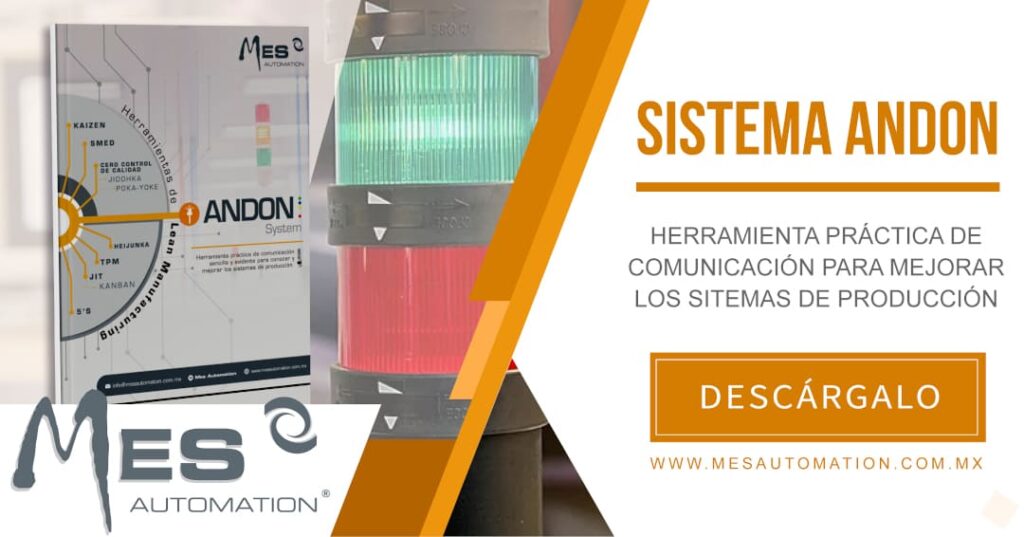
3. One of its tools is the ANDON system
As you already know, lean manufacturing implements different quality tools to eliminate waste and optimize performance on the production floor, and one of them is the ANDON system.
And this technological solution allows one of the fundamental principles of lean manufacturing to be followed to the letter: detecting problems and their origins.
In addition, it indicates the working conditions on the production floor, in real time, through displays of lights and signals, which also helps the supervisor to detect operational deficiencies and, in general terms, evaluate performance.
4 Flexibility
A false belief in relation to lean manufacturing is that it is an inflexible philosophy, which limits the ability to produce a variety of product codes. This is not entirely true, since flexibility will provide the factory with the possibility of producing in different quantities without affecting standardization and the use of materials and technological and human resources.
In summary, lean manufacturing focuses on waste that does not provide added value to the product or service that a customer ultimately pays for; it is considered production or process damage that affects the management system and represents a direct additional cost for the company. .
The elimination or reduction of waste will lead to a sustainable improvement in profitability, giving greater effectiveness, efficiency and flexibility to the production process. By implementing some of the Lean tools, the company's staff will become specialists in waste elimination, for which the organization's management must foster an environment that promotes the generation of ideas and the continuous elimination of waste.
How Industry 4.0 is Transforming Lean Manufacturing
The concept of Industry 4.0 is broad and encompasses technologies such as the Industrial Internet of Things (IIoT), cloud, edge computing and digital twins, as well as other key concepts such as machine-to-machine (M2M) communication.
The foundation of the Fourth Industrial Revolution is automation. All systems that collect and communicate data are designed to make industrial and manufacturing practices more efficient and autonomous.
Technology in Industry 4.0 connects previously isolated systems through hardware and software, provides information transparency, improves the human decision-making process, and decentralizes decisions within technological systems so that humans need to intervene less frequently.
What does Industry 4.0 mean for Lean Manufacturing?
In Lean Manufacturing, organizations prioritize minimizing waste while maximizing productivity. The Lean Manufacturing production method is a philosophy that seamlessly integrates with Industry 4.0 innovations, which support efficiency initiatives at every stage of the manufacturing process. Industry 4.0 helps Lean manufacturers save time, money, energy, material and human resources.
Manufacturers using Industry 4.0 technology can reduce downtime through predictive and prescriptive maintenance using sensors and other IIoT devices, maximize machine utilization, quickly adapt to market fluctuations, identify and mitigate bottlenecks, make real-time decisions such as automatically stopping a machine in the event of a safety issue using edge computing, increase visibility on the production floor, optimize warehouse space and other sources of fixed costs, and make more informed decisions overall using visualized data.
The list of use cases is endless if manufacturers can build the right infrastructure to support data collection and transformation.
How manufacturers are using Industry 4.0 technology to increase efficiency Smart factories are one of the biggest trends in the fourth industrial revolution and are a prime example of the digitalization of vertical and horizontal value chains, showcasing almost all of the defining technologies of the era. Some of the Industry 4.0 technologies that Lean manufacturers are using in smart factories include the following solutions, but for a complete review, explore our full guide:
- Digital Twins: The digital twins Digital twins are digital representations of physical systems such as the factory floor and all the machinery on it. The digital twin connects and monitors the entire factory floor as a system, so that it can be monitored and the data can be used to guide automated decisions. In these systems, machines communicate with each other as well as with humans.
- Smart Sensors: Smart sensors collect data on the production floor, including quality data, part count, machine utilization, and other key data and metrics. Once this raw data is contextualized, it can be used to guide decision making in a variety of use cases, and enable manufacturers to implement advanced strategies such as predictive maintenance.
- Predictive and Prescriptive Maintenance: These advanced maintenance strategies rely on data collected from sensors and machine interface connectors that are then analyzed to develop maintenance plans that fully utilize resources. That means parts are not replaced while they still have useful life, as is often the case with usage-based preventative maintenance. It also means parts are replaced before they lose enough effectiveness to reduce quality to an unacceptable level or risk costly long-term damage to the machinery. With prescriptive maintenance, analytics also include potential solutions to problems by optimizing for a particular KPI (or set of KPIs), such as waste reduction or speed.
Industry 4.0 is unleashing a variety of technologies that are driving a more efficient manufacturing industry. The core of these solutions involves extracting data from operations and using it to drive better, faster decision-making across the business, whether you are in charge of maintenance, quality, production, or the entire plant. Starting with the basics and focusing on the heart of the operation – the machines and people on the shop floor – will help build the foundation for a smarter, more connected Lean operation.
Perfect! If you have accompanied us to this point in the reading, you already know, for sure, what lean manufacturing is about and what the aspects that characterize it are.
Did you find this article interesting? We hope so! If you'd like to learn more about lean manufacturing and its best technological solutions, which will allow you to optimize your factory's performance, we invite you to explore the 5 benefits of implementing the ANDON system in your factory . You can also contact an expert advisor at MES Automation , who will help you understand how Lean Manufacturing can be applied to your company's specific situation.
Originally published on June 12, 2019, updated on October 11, 2024
 What is a SCADA system and how can it help your factory?