

An ANDON system is a solution used to show the status of production, through audio signals and light signals indicating the working conditions on the production floor. If you are looking to implement a production support system to reduce unforeseen downtime, the ANDON system is an option that you should take into account.
Mes Automation's ANDON system is a visual information platform for lean production that is characterized by providing great benefits; below we will reveal 5 of them.
Unexpected event log
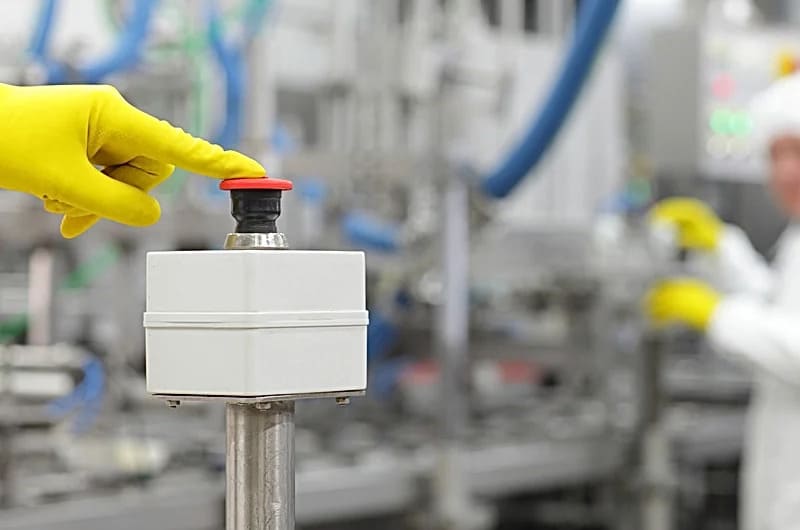
Real-time recording of unexpected events is crucial to ensure process continuity in a production plant. With an ANDON system, operators can identify machine failures, line interruptions or any setbacks that affect production immediately.
This allows not only for rapid detection, but also the possibility of reacting proactively, preventing a minor problem from becoming a significant production stoppage.
Operators, by being notified instantly, can activate emergency protocols, request technical support or make corrective decisions on the spot, thus minimizing interruptions and downtime.
Quick response
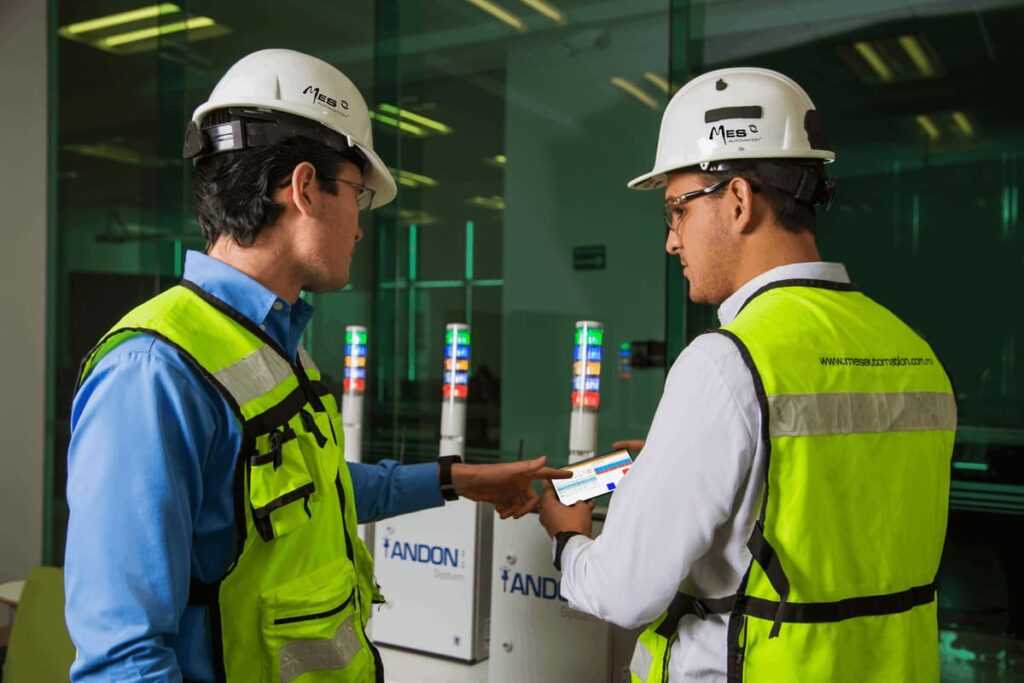
The ANDON system not only records events, but also facilitates a fast and effective response. After notifying the supervisor of a failure, the system allows the type of problem to be classified, its urgency prioritized, and assigned to the appropriate team for resolution. This ability to quickly categorize and escalate problems significantly reduces response times, resulting in greater operational efficiency.
The tool also documents each incident, allowing for post-incident analysis that helps prevent future failures and continually improve troubleshooting procedures.
A practical example of this rapid response can be seen in an automotive plant where an operator detects a fault in one of the robotic welding machines on the assembly line. When the ANDON system is activated, an alert is immediately sent to the supervisor and the maintenance team. The system categorizes the problem as a critical welding failure, since it directly impacts the structural integrity of the vehicles.
The maintenance team receives the notification with a high priority and is quickly directed to the specific location of the faulty machine. Meanwhile, the ANDON system also notifies quality managers to assess whether the affected parts should be removed from the line. Thanks to the rapid escalation of the problem, the maintenance team repairs the machine within minutes, avoiding long downtime and reducing the impact on production.
Ultimately, the incident is documented with details about the nature of the failure, response time and actions taken, allowing for post-processing analysis and adjustment of the preventative maintenance plan, reducing the likelihood of the same failure occurring again in the future.
Cost reduction and time optimization
An ANDON system makes it possible to identify and eliminate those operations or tasks that do not add direct value to the production process, helping to optimize the workflow. This contributes to better inventory management, ensuring that the right amount of materials is available when needed, and to the early detection of operational problems that could cause inefficiencies or waste of resources.
Optimizing processes, by reducing unproductive times and preventing problems before they escalate, generates a reduction in operating costs, increasing plant profitability without compromising product quality.
Increase in information levels
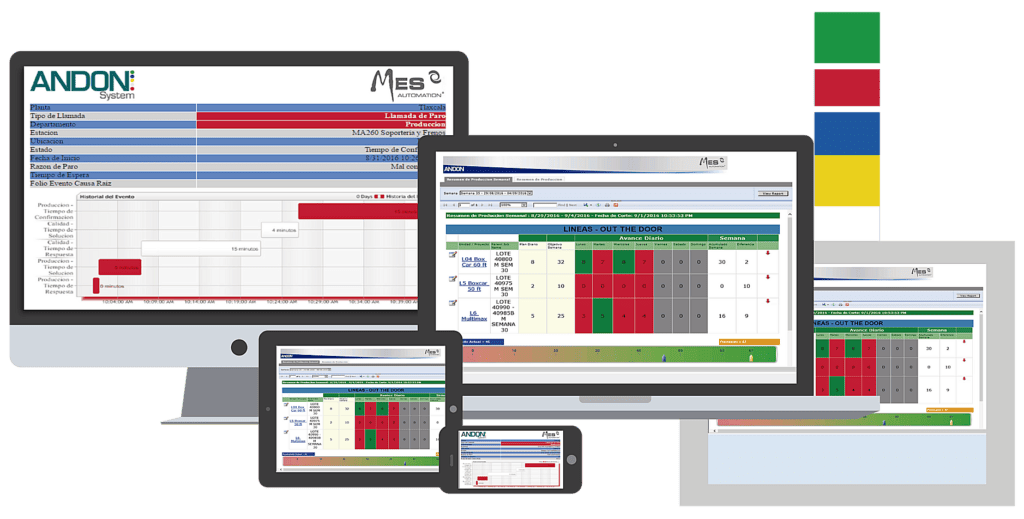
Implementing an ANDON system not only improves fault response capabilities, but also provides a complete view of plant performance. Operators, supervisors and managers have access to key real-time information on the status of operations, allowing for more informed and accurate decision making. In addition, the system collects historical data, which can be used to generate detailed reports and trend graphs, which is invaluable for continuous improvement analysis.
This enables companies to identify areas of opportunity, establish patterns of behavior in failures and take proactive measures that improve efficiency and productivity in the long term.
Suppose that on the assembly line of an automotive plant, an operator detects that a defective part (such as a braking system component) has been installed incorrectly or does not meet established quality standards.
- Immediate notification and line stoppage: Upon noticing the problem, the operator activates the ANDON system, which sends a real-time alert to the supervisor and the quality and maintenance departments. At the same time, the system can automatically stop the assembly line to prevent further vehicles from moving forward with the defect.
- Classification and quick response: The system allows the operator to classify the type of problem (in this case, a defect in the installation of the brake component) and escalate it according to its severity. Supervisors receive the notification, assess the situation and assign the maintenance or quality team to correct the error.
- Documentation and analysis: While the problem is being corrected, the ANDON system collects data about the event, such as response time, equipment involved, and the root cause of the defect. This information is automatically documented and made available for further analysis.
- Optimization and continuous improvement: With the data collected, the plant can analyze the recurrence of this type of failure in the braking system and determine whether adjustments should be made in the assembly process, in the supply of parts or in the training of personnel. The reports generated, which include trend graphs and statistics of similar events, allow the automotive plant to identify areas for improvement and apply changes that optimize production, minimizing defects and reducing downtime in the future.
This approach ensures that issues are resolved quickly and the impact on production is minimal, improving overall plant efficiency and ensuring the quality of the final product.
Response to contingencies
When an incident is not resolved within a stipulated time, the ANDON system automatically escalates the alert to higher levels of the organization, ensuring that the problem is addressed immediately and appropriately.
This type of escalation not only ensures that the fault is dealt with by the appropriate personnel, but also involves technical support or maintenance departments when necessary. This functionality is vital for managing serious contingencies that could significantly impact production, ensuring that the plant can maintain a steady flow of work and minimize extended downtime.
The system acts as a guarantor of operational efficiency, providing a clear escalation and communication structure to resolve complex issues in an agile manner.
Since you are interested in learning more about the benefits of an ANDON system for production processes, we invite you to contact a MES Automation advisor , who will guide you through the process of digitizing your company's production.
Originally published on June 19, 2019, updated on October 11, 2024
 4 things you didn't know about Lean Manufacturing